

The NZNTT is actively seeking updated information for all trees in the register. If you have information about this tree that we don't currently have recorded, or wish to advise of an inaccuracy please use our information submission form to help us build a complete profile of this tree.
Tree Information x
| Identifier: | CR/2221 |
|---|---|
| Tree Type: | Single |
| Registered By: | Hammer, J.R. |
| Registration Category: | General tree/s |
| General Notes:
|
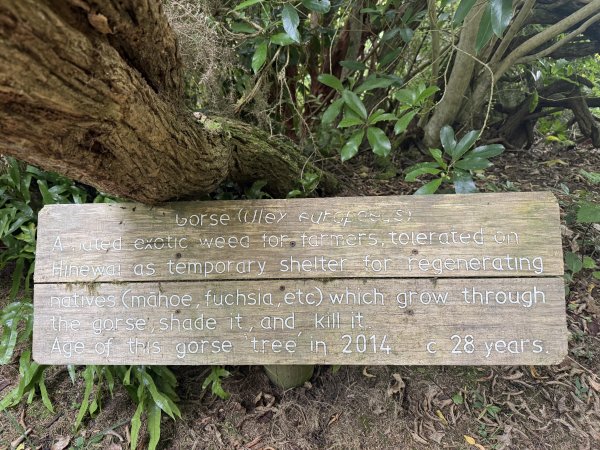
Gorse, widely regarded as one of New Zealand’s most unwelcome botanical arrivals, has nonetheless earned an unlikely place of honour in the reforestation story of Hinewai Reserve.
Frequently cursed, occasionally burned, and almost universally disliked, gorse proved to be an outstanding nurse crop, providing shelter and ideal germination conditions for regenerating native seedlings. There is also increased protection from wind, frost and grazing — while patiently absorbing decades of public hostility. Hugh Wilson’s decision to retain gorse was highly controversial at the time and earned him sustained criticism, including abuse and threats, for what many considered an outrageous ecological gamble. That vision has since been decisively vindicated. Through Hugh Wilson’s leadership, the enduring support of the Maurice White Native Forest Trust, and the dedication of hundreds of volunteers, Hinewai Reserve is now recognised as one of New Zealand’s premier ecological restoration projects. This emergent native canopy helps sustain some impressive mature native trees such as CR/2220. In recognition of this legacy, and marking the first gorse ever entered into the New Zealand Tree Register, the current New Zealand Champion Gorse is named Hugh’s Gorse Bush. Having done the hard work of forest restoration, it stands as a reminder that even the most maligned species can achieve greatness — given time, patience, and an advocate willing to ignore the shouting (Hammer, J.R., 2026). See A New Zealand Botanist Refused to Kill this Thorny Weed Treeline Journal, YouTube, accessed 20 Jan 2026 |
Single Tree Details
| Genus: | Ulex | |
|---|---|---|
| Species: | europaeus | |
| Common names: | gorse, common gorse, furze | |
| Given Name: | Hugh Wilson's Gorse Bush | |
| Height: | 3.80m | |
| Height measurement method: | Nikon Forestry Pro | |
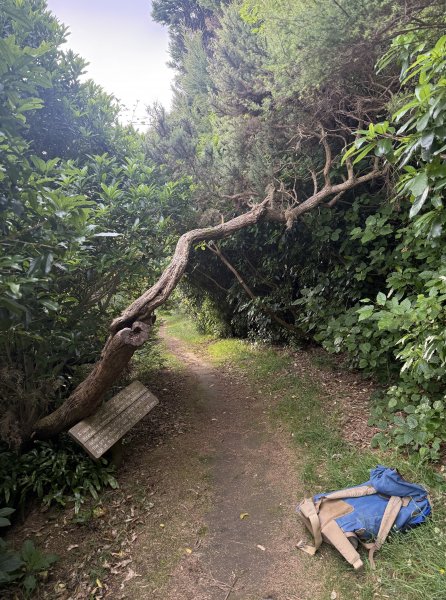
| Height Comments: | This tree displays an elongated, over-mature form resulting from increasing shade by surrounding regenerating canopy species. Reduced light availability indicates it is in the later stages of its life cycle and is likely to decline in the near future. Its eventual senescence and collapse will contribute ecologically valuable coarse woody debris to the forest floor, supporting soil health, habitat diversity, and ongoing native forest regeneration. | |
| Girth: | 75 cm | |
| Girth measurement height: | 1.4 m | |
| Girth Comments: | (none) | |
| Diameter: | 23.9 cm | |
| Crown Spread A: | 1.00m | |
| Crown Spread B: | 1.00m | |
| Avg. Crown Spread: | 1.00m | |
| Actual Planting Date: | actual date not specified | |
| Approx. Planting Date: |
e.g. circa. 1860 |
|
| Current Age: | not known years | |
| Tree Health Description: | This tree is in decline as a result of shading from surrounding emergent native forest regeneration, reflecting natural successional processes within the site. | |
| Tree Form Type: | Single Trunk | |
| Number of Trunks: | 1 | |
| Tree Form Comments: | (none) | |
| Champion Tree Score: | 43 | |
| Local Protection Status: | No | |
| Tree Present: | Yes | |
| STEM Score: | 0 |
Observations
| Date | Observer | Action |
|---|---|---|
| 16 Jan 2026 | Hammer, J.R. |
Location
|
|||||||||||||||||||||
Images
| Preview | Credit | Date |
|---|---|---|
 |
Ra Hammer | 16 Jan 2026 |
 |
Ra Hammer | 16 Jan 2026 |